

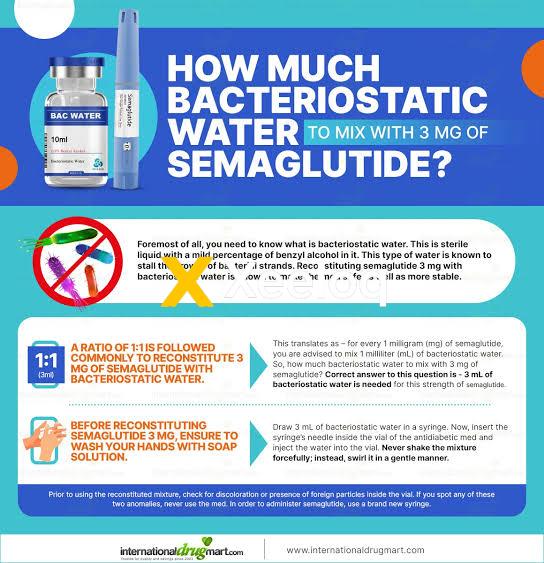
Have you recently brought home a vial and now you are staring at it, feeling confused? You are definitely not alone in this situation. The biggest question people ask is how much bacteriostatic water to mix with 10mg of semaglutide. Getting this exact measurement right is extremely important for your safety and your results. Making a mistake with the liquid means your dosage will be completely wrong. That can be a huge waste of your money or, worse, bad for your health. This guide is written for everyday people looking for plain answers. I will explain the math simply so you do not need a science degree to understand it. Grab a seat and let us walk through the entire process together.

What is Bacteriostatic Water?

Before doing any math, it helps to know what you are actually handling. Bacteriostatic water is a special type of sterile water created specifically for medical mixing. It contains a small amount of an ingredient called benzyl alcohol. This alcohol acts as a safe preservative. It stops dangerous bacteria from growing inside your vial after you puncture the rubber stopper with a needle. Regular sterile water does not have this preservative. If you use regular sterile water by mistake, the mixture is only safe for a single use. Because a 10mg vial is quite large and will last you several weeks, you absolutely need the bacteriostatic version to keep it safe.

Why It Matters for Your Health

Using the right water protects you from serious infections. Whenever a needle goes into a vial, there is a tiny chance germs could enter the liquid. The benzyl alcohol continuously kills those germs. This means you can safely store your mixed vial in the fridge and use it multiple times for about 28 days without worry.

How Much Bacteriostatic Water to Mix With 10mg of Semaglutide?

The short answer is that there is no single perfect amount, but 2ml or 4ml are the most common and safest choices. The amount of water you add simply determines how concentrated your liquid will be. Think of it like making a cup of tea. If you add a lot of water to one tea bag, the tea is weak. If you add a little water to the same tea bag, the tea is strong. The amount of tea leaves (the 10mg of powder) never changes. The amount of water you choose depends on the dose your doctor told you to take. You want to make the math easy for your tiny insulin syringe.

The 2ml Mixing Method

Adding 2ml of water is very popular. This creates a strong concentration. Here is exactly how the math looks:
  • You start with 10mg of powder.
  • You add 2ml of water to the vial.
  • 10mg divided by 2ml equals 5mg per ml.
  • In a standard 100-unit insulin syringe, drawing 10 units will give you a 0.5mg dose.
  • This method is great if you are taking a higher dose because you will not need to inject a large amount of liquid into your body.

    The 4ml Mixing Method

    Many people prefer adding 4ml of water. This dilutes the mixture more, which is very helpful if your prescribed dose is small.
  • You start with 10mg of powder.
  • You add 4ml of water to the vial.
  • 10mg divided by 4ml equals 2.5mg per ml.
  • In a standard 100-unit insulin syringe, drawing 10 units will give you a 0.25mg dose.
If you are on a starting dose, adding 4ml makes it much easier to pull exact, tiny amounts into the syringe without making an error.

What Do You Need for This Process?

You need a few basic supplies before you begin. Having everything ready on your table stops you from rushing and making silly mistakes. Bacteriostatic Water: Ensure your bottle is securely sealed and well within its expiry date. Alcohol Swabs: You need these to clean the tops of your vials before doing absolutely anything else. Mixing Syringe: A larger syringe, like a 3ml or 5ml size, is best for moving the water into the powder vial. Insulin Syringes: These are the tiny needles you will use later to draw your daily or weekly doses.

Prices and Costs in Nigeria

If you live in Nigeria, getting these supplies requires a visit to a good pharmacy. Places like Medplus, HealthPlus, or large independent pharmacies in Lagos, Abuja, or Port Harcourt usually carry them. A bottle of bacteriostatic water can cost anywhere between 5,000 Naira to 15,000 Naira, depending on the brand. It is not always displayed on the open shelf, so you might need to ask the pharmacist directly. A pack of alcohol swabs is very cheap, usually under 2,000 Naira for a big box. A pack of high-quality insulin syringes will cost you around 3,000 to 5,000 Naira. Always check that the packaging is completely sealed before paying to ensure everything is perfectly sterile.

How to Mix It Safely

Knowing the math is one thing, but handling the powder properly is just as important. Peptides are very fragile. If you handle them roughly, you can destroy the medicine completely. Start by washing your hands thoroughly with soap and water. Dry them with a clean towel. Take an alcohol swab and firmly wipe the rubber top of the bacteriostatic water bottle. Do the exact same thing to the rubber top of your powder vial. Take your large mixing syringe and pull plain air into it. The amount of air should match the amount of water you plan to take, like 2ml. Push that air into the water bottle. This stops a vacuum from forming inside the glass and makes pulling the water out much easier. Draw your measured 2ml or 4ml of water into the syringe. Pull the needle out slowly. Push the needle into your powder vial. Do not squirt the water directly onto the powder. Angle the needle slightly so the water drips slowly down the glass side of the vial.

The Gentle Rolling Technique

Once the water is inside, remove the syringe carefully. You will probably notice the white powder dissolving almost instantly. Do not shake the vial. Shaking damages the delicate structure of the medicine and creates bubbles that ruin your dosage. Hold the vial between your fingers and gently swirl it or roll it back and forth. Keep doing this until the liquid is completely clear. If you see chunks or cloudiness, keep rolling gently until it looks like pure water.

Common Mistakes People Make

Even smart people make errors when doing this as beginners. Avoiding these common mistakes will save your medicine and keep you safe. Shaking the vial vigorously: As mentioned above, this breaks the peptide bonds. Treat the vial like it holds something very fragile. Touching the bare needle: Never let the needle touch your fingers, the table, or your clothes. If it touches anything, throw it away and use a new one. Forgetting the fridge: In Nigeria, our weather is very hot most of the year. Once you mix the powder with water, it must stay cold. Keeping it at room temperature will ruin it quickly. Put it in the fridge immediately after mixing. Reusing dirty needles: Insulin syringes are meant for one single poke. Reusing them hurts more because the tip gets dull, and it introduces dangerous bacteria into your body. Doing the wrong math: Write your math down on a piece of paper before you mix. If you forget how much water you added, you will never know your true dosage.

Important Storage Rules

Before you mix it, the dry powder can survive at room temperature for a while. It is always better to keep it in the fridge anyway just to be extra safe. After you mix it with the bacteriostatic water, the rules change completely. It must stay refrigerated at all times. Keep it away from direct sunlight. Do not put it in the freezer. Freezing the liquid will completely destroy the medicine. Just keep it in the regular cooling section of your fridge, ideally near the back where the temperature is steady and cool.

Frequently Asked Questions (FAQs)

Can I use sterile water instead of bacteriostatic water?

You can only use regular sterile water if you plan to use the entire vial in one single day. Since a 10mg vial is meant to last for weeks, you absolutely must use bacteriostatic water to stop bacteria growth.

How long does the mixed vial last in the fridge?

Once mixed, it is generally safe and effective for about 28 days. After a month, the medicine starts to lose its strength and bacteria might begin to grow. It is safer to throw away any leftovers after 28 days.

What happens if I shake the vial by mistake?

If you shook it lightly once, it might still be okay. If you shook it hard like a bottle of juice, you likely damaged the medicine. It might not work as well, or it might not work at all.

Do I add more water if I want a stronger dose?

No, it is the exact opposite. Adding more water makes the liquid weaker and more diluted. Adding less water makes the liquid stronger and more concentrated.

Where should I keep my vial if the power goes out?

Power outages are a common reality here. Keep your vial in a sealed plastic container inside the fridge. Do not open the fridge door too often so the cold air stays trapped inside. If the power is out for days, use a cooler with ice blocks, but do not let the vial touch the ice directly.

Can I buy bacteriostatic water without a prescription?

Yes, in most places, including major pharmacies across Nigeria, you can buy it over the counter. Just ask the pharmacist for it directly as they usually keep it behind the counter. Disclaimer: I am a blogger sharing helpful information, not a medical doctor. This guide is meant to help explain the math and the physical process of mixing. Always talk to your healthcare provider or a licensed pharmacist to confirm your specific dosage and treatment plan.